About
I see systems where other people see separate problems
A platform complaint may be a workflow problem. A reporting problem may be a data problem. A team asking for automation may first need a map. I work in those gaps, where the visible issue is only the part of the system currently making the most noise.
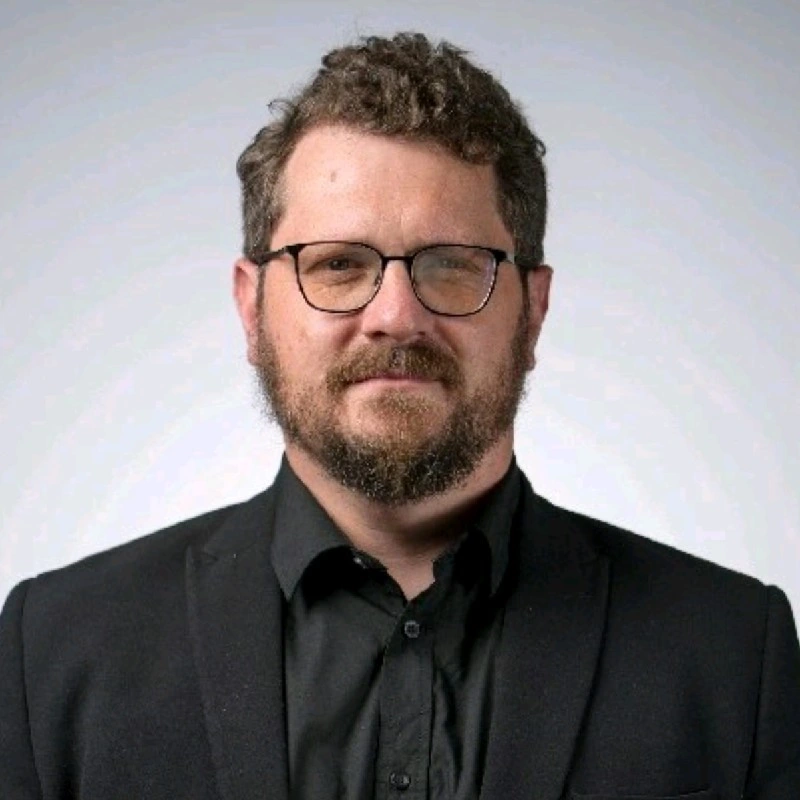
Michael Lockett
Milo · Systems architect, event technology specialist, speaker, and writer.
I co-founded Symbiometry and work as its CTO. My bias is towards practical architecture, visible proof, and technology that survives contact with the work.
Most people call me Milo. I’m a self-taught technology leader, fractional CTO, systems architect, event technology specialist, speaker, and writer. I work where platforms, data, interfaces, suppliers and human behaviour collide, because that is usually where the real system is hiding.
My route into technology was practical rather than ceremonial. I learned by building, fixing, customising, and taking responsibility for live systems where timing mattered and vague decisions became expensive quickly. That work grew from front-end detail into technical strategy, platform architecture, systems integration, workflow design, project recovery, automation, AI support, and technology leadership.
I joined Register Event as a website designer and developer in 2013, when my event-technology journey began, and shortly after became its creative and technical director until assuming the role of CTO. I rebuilt the technology and delivery approach, helped scale the business, and stayed involved from sales and demonstrations through to live delivery. That work has never been limited to one company. Throughout the same period I have built freelance websites and digital projects and advised selected private clients independently.
I’m autistic and have ADHD. That is part of the lens, not a slogan. I notice patterns, dependencies, and avoidable friction quickly, and I experience unclear systems as noise rather than a mild inconvenience. It does not make admin charming. It does make me determined to put more of the structure into the system, so the people inside it do not have to carry everything in their heads.
I co-founded Symbiometry and work as its CTO, applying this thinking to complex MICE delivery. Alongside that role, I work with selected organisations through fractional leadership, technical advisory, fixed-scope and interim engagements. My wider work and writing follow the same underlying question: how do we make complicated systems more truthful, usable, and humane without pretending the complexity was never there?
- Senior Technology Leader
- Fractional CTO & Technical Adviser
- Systems Strategy & Integration
- Project Recovery & Complex Delivery
- AI, Automation & Workflow Design
- Event Technology & EventsAir Specialist
- Speaker & Writer
I do not experience unclear systems as a mild inconvenience. I experience them as noise.
I am autistic and have ADHD. That is part of how I notice patterns, dependencies, contradictions, and the small pieces of friction that quietly become everybody's problem later. It is also why systems that rely on memory, vague ownership, or constant context-switching bother me more than they probably bother most people.
This is not a superpower claim. It is a lens, with advantages and costs. The useful part is that I care deeply about building structure outside the person: clearer workflows, calmer interfaces, visible state, and tools that stop asking tired people to hold the entire operation in their heads.
How I got here
A longer operating history than one company name
My event-technology journey began in 2013 when I joined Register Event as a website designer and developer, before progressing through creative and technical leadership to co-owner and CTO. I later co-founded Symbiometry and remain its CTO.
2010
New business development
Grove Information Systems
Sold Google Apps and ClearFormat to supplied business leads, working to sales targets and speaking directly with IT managers. It was a short role, but a useful introduction to the commercial reality around technology decisions.
2013
Web designer and developer, Register Event
Technology, delivery and commercial growth
Joined Register Event as a web designer and developer. Rebuilt the technology and delivery approach, introduced repeatable website systems and helped scale the business while remaining hands-on across sales, demonstrations, solution design and delivery as CTO.
2015
A repeatable delivery system
100+ websites and 3,000+ users
By 2015 the portfolio had passed 100 websites. A reusable template and cloning system reduced a typical turnaround from more than two weeks to about 48 hours while supporting more than 3,000 users at that stage.
2021
Symbiometry
Co-Founder and CTO
Co-founded Symbiometry and remains its CTO, connecting EventsAir expertise with systems thinking, workflow automation and practical AI.
Now
Selected leadership and advisory work
Alongside Symbiometry
Leads Symbiometry and considers selected fractional, advisory, interim and technology-leadership opportunities where the work and level of responsibility are a good fit.
Operating scale
Useful numbers, with the context left attached
The point is not that repetition makes every problem identical. It makes recurring structure easier to recognise before the team pays for it again.
500+
websites and digital experiences
Delivered through Register Event, Symbiometry and independent freelance projects.
98%
of the company portfolio personally built
Approximately 98 per cent of the Register Event and Symbiometry portfolio was personally designed and built.
2013
working in event technology since
Experience spanning platforms, websites, registration, data, onsite delivery and connected operations.
48h
historic website turnaround
A template and cloning system reduced a typical build from more than two weeks to about 48 hours.
I have not only built what somebody else sold
My responsibility has covered the commercial path as well as the technical one. That keeps solution design connected to what was promised, what was priced and who will own the consequence.
- Qualifying opportunities and running discovery conversations
- Selling and demonstrating products, platforms and proposed solutions
- Translating operational needs into technical solutions
- Preparing proposals, quotes and pricing
- Negotiating scope, responsibility and commercial terms
- Growing accounts through useful follow-on work
- Leading delivery and remaining involved after the sale
I'm the sort of person who sees the dependency behind the delay, the ownership gap behind the platform complaint, and the future spreadsheet quietly forming inside today's workaround. Once I can see the system, I find it difficult to leave it badly explained.
I'm strongest when a team has outgrown its patchwork or a technical project has become difficult to control. I can map how the work actually moves, review the architecture and delivery state, understand the awkward exceptions, align leaders and developers, and provide the strategy, recovery plan or temporary leadership the situation needs.
Good systems carry structure. Good interfaces make the next decision easier to see. Good automation removes repeated labour while keeping judgement, responsibility, and the ability to intervene exactly where they belong.
Because too much important work still depends on memory, workarounds, and one exhausted person knowing where everything is. A better system gives people room to think instead of repeatedly proving that they were paying attention.
- Design for the real operator, not the idealised process diagram.
- Complex does not have to mean chaotic.
- If the data is messy, the interface must be even clearer.
- Automation should remove repetition, not responsibility.
- AI should support judgement, not pretend to replace it.
The disciplines vary. The question underneath them does not.
Systems under pressure, practical AI with visible human judgement, and Reason Wins: a wider exploration of neurodivergence, perception, truth, and the badly documented interface of being human.